book your appointments on : 7496004163, 9991920720
kati basti
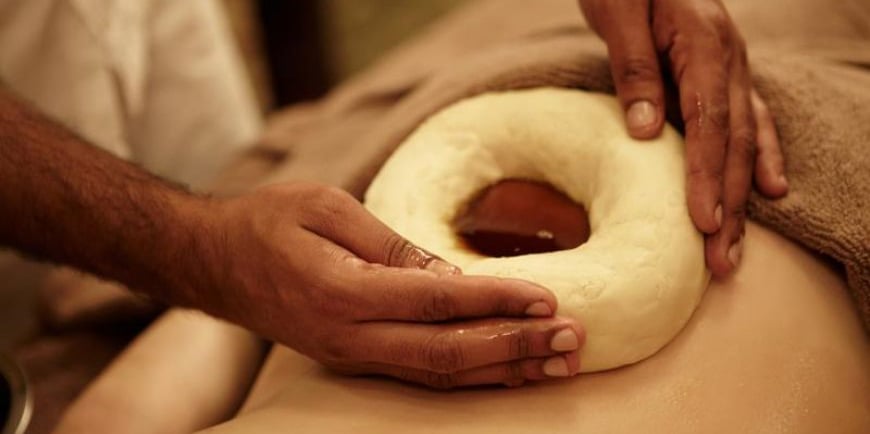
Kati Basti (also known as Kati Vasti) is a specialized, non-invasive Ayurvedic therapy for lower back pain and stiffness. It involves creating a circular reservoir, or "dam," made from black gram or wheat flour dough, on the lower back and filling it with warm, medicated herbal oil.
How It Works and What to Expect
The term Kati means lower back/waist in Sanskrit, and Basti means to hold or retain. The procedure combines external oleation (application of oil, snehana) and fomentation (heat therapy, swedana).
Preparation: The patient lies face down. A ring of dough, about four to five inches in diameter, is prepared and placed over the lumbosacral area. It is sealed to prevent leaks.
Procedure: Warm, medicated oil (the specific type chosen by a practitioner based on the individual's needs) is slowly poured into the dough ring. The temperature of the oil is carefully maintained, usually around 43°C (109°F).
Duration: The oil is typically retained in the reservoir for 30 to 45 minutes.
Post-Procedure: After the oil and dough are removed, a gentle back massage and sometimes herbal steam therapy (nadi sweda) are administered to further enhance the therapeutic effect.
Key Benefits and Uses
Kati Basti is widely used to address a variety of musculoskeletal and spinal disorders by promoting blood circulation, nourishing tissues, and reducing inflammation.
Alleviates chronic lower back pain
Reduces muscle stiffness and spasms
Helps manage sciatica (pain that travels down the leg)
Assists with herniated or slipped discs
Supports recovery from lumbar spondylosis
Strengthens bones, nerves, and connective tissues in the lumbar region
The therapy is generally safe when performed by a qualified Ayurvedic practitioner. In certain situations, such as deep-seated inflammation, severe osteoporosis, or acute infections, it may be contraindicated, so consulting a healthcare professional is recommended.